Humpback Whale
Iain Kerr |

|
Advertisement

|
Creature Profile
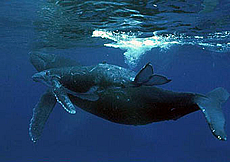
The humpback whale is found in the waters of the Atlantic, Arctic, and Pacific Oceans, and also the Bering Sea and the waters surrounding Antarctica. Adults have thick, stout bodies and can weigh over 100,000 lb and grow up to 46 feet long. Their skin is dark blue to black in color and their underparts are white. Their flippers are white with knobs on the edges and can grow to be quite long, reaching up to a third of the their body length. The top of their heads are flat and covered with more fleshy knobs.
The humpback whale is commonly found in coastal or shelf waters of the northern oceans in the summer for feeding, and in the winter they migrate to tropical or subtropical waters where they mate and raise their calves. Most mating occurs in the winter and females give birth to a single calf once every two to three years. The gestation period lasts from 11 to 11.5 months. Humpback whales are opportunistic feeders and feed on plankton and other plants and animals found on the oceans surface. They also eat fish found in large schools.
There are only about 6,000 humpback whales left in the oceans. In the early 1900s whaling was very popular and over 60,000 whales were killed. Commercial whaling has been banned since the late 1950s, and currently whaling has been minimized significantly. Today the threats include accidental deaths by entanglement in fishing gear or collisions with ships.
Wikipedia Article

|
Wikipedia Article Copyright Notice: This article is licensed under the GNU Free Documentation License. It uses material from the Wikipedia article "Humpback whale". |
More Links about the Humpback Whale:
Reference Links:Humpback Whale - Wikipedia
Conservation Links:
Ocean Alliance - Whale Conservation Institute
May 11, 2017
Glenn, C. R. 2006. "Earth's Endangered Creatures - Humpback Whale Facts" (Online). Accessed 4/25/2024 at http://earthsendangered.com/profile.asp?sp=931&ID=10.
Need more Humpback Whale facts?